Sustainable Polymer Sourcing: Practical Steps for Manufacturers
Sustainability in plastics is not achieved through a single material or claim. It requires decisions across product design, sourcing, manufacturing, logistics, use and end-of-life management. For manufacturers, the most effective starting point is a clear evaluation of what the product must do and where meaningful improvements can be made without compromising safety or performance.
This guide outlines practical considerations for a more responsible polymer sourcing strategy.
Begin with the application
The environmental objective should be defined alongside the technical requirement. A packaging film, durable pipe, medical component and automotive part have very different performance and compliance needs.
Start by documenting:
- Required service life
- Mechanical and barrier performance
- Safety and regulatory requirements
- Processing method
- Recyclability considerations
- Exposure to heat, chemicals, light or weather
- Expected disposal or recovery route
This application-first approach helps prevent material substitutions that look attractive on paper but fail in production or service.
Use material efficiently
Reducing unnecessary material can lower resource use, transport weight and waste. Lightweighting, downgauging and design optimization may offer meaningful benefits when product performance is maintained.
Material efficiency should be validated carefully. A lighter product that fails early or produces excessive manufacturing scrap may not deliver the intended improvement.
Evaluate recycled content responsibly
Recycled materials can reduce dependence on virgin feedstock and support circularity objectives. However, quality and consistency can vary according to the waste stream, sorting, processing and contamination controls.
Important questions include:
- Is the material post-industrial or post-consumer?
- What level of traceability is available?
- Are melt flow, density and contamination controlled?
- Is the material suitable for the intended application?
- What documentation or certification is supplied?
- How will colour and odour be managed?
Pilot testing is particularly important when introducing recycled content into an established formulation.
Consider renewable and bioplastic options
Bio-based and compostable materials can be relevant for selected applications, but the terminology must be used accurately. Bio-based does not always mean biodegradable, and biodegradable does not automatically mean suitable for every disposal environment.
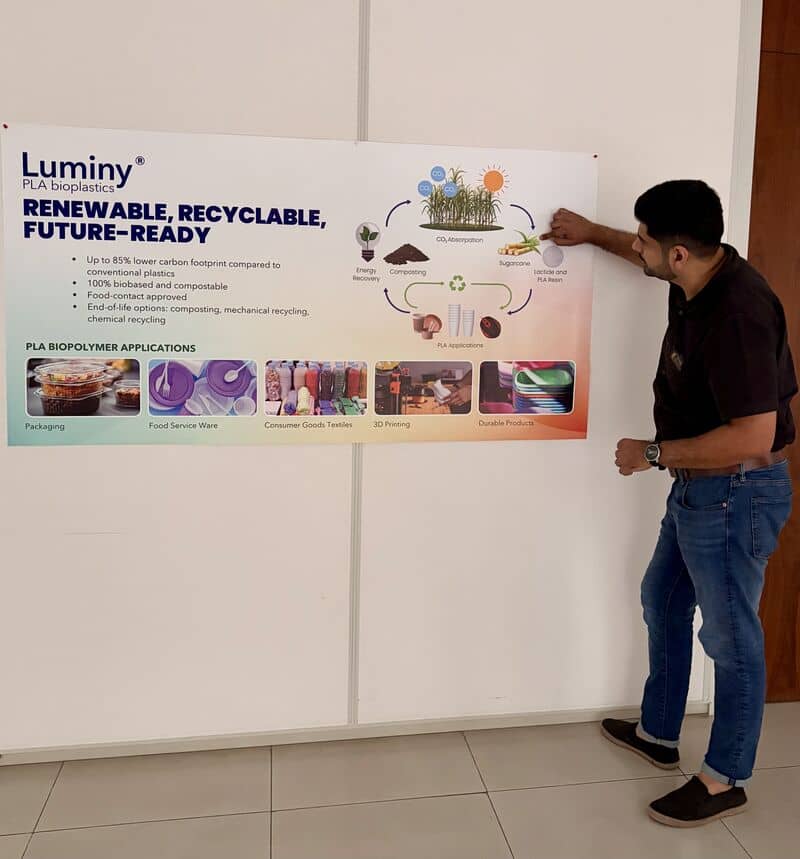
PLA and other bioplastic solutions may support specific sustainability goals when product performance and end-of-life infrastructure are aligned. Manufacturers should confirm certification, processing requirements and realistic recovery conditions before making claims.
Read about Multi Trade Group’s work supporting PLA bioplastics adoption in the Middle East.
Improve production consistency
Stable processing can reduce rejects, energy use and unplanned downtime. Material consistency, correct drying where required, controlled dosing and appropriate machine settings all contribute to efficient production.
Suppliers and converters should communicate about:
- Recommended processing range
- Storage and handling
- Lot-to-lot consistency
- Additive interactions
- Start-up and changeover waste
- Regrind or in-process recycling plans
Operational improvements can complement changes in material selection.
Review logistics and inventory planning
Sustainability also includes the way materials move through the supply chain. Better forecasting and shipment planning can reduce emergency freight, fragmented deliveries and excess inventory.
Working with a distribution partner that understands regional demand, lead times and delivery constraints can support more efficient ordering decisions. Reliable supply may also reduce the need for excessive safety stock.
Ask for evidence and documentation
Environmental claims should be supported by appropriate evidence. Depending on the material and market, this may include technical data, certificates, chain-of-custody documentation or recognized standards.
Multi Trade Group publishes information about its QHSE, sustainability commitments, certificates and company policies. Customers should also define the documentation required for their own application and jurisdiction.
Build sustainability into supplier discussions
Effective progress comes from collaboration between producers, distributors, converters and customers. Instead of asking only for a “green material,” provide a structured brief covering performance, process, volume, destination and environmental priorities.
This allows suppliers to evaluate realistic options such as:
- Recycled-content materials
- Bio-based or compostable solutions
- Lower-impact formulations
- Material or additive changes that improve processing
- Packaging and logistics improvements
Take a practical, measurable approach
The best sustainability strategy is specific, measurable and appropriate for the product. Begin with reliable data, test proposed changes and review performance after implementation.
Multi Trade Group works with producers, converters and regional partners to support responsible material choices within a dependable global supply network. Explore our polymer, additive and specialty-material portfolio, or discuss a sustainable sourcing requirement with our team.