Masterbatch and Compounding: A Practical Guide for Manufacturers
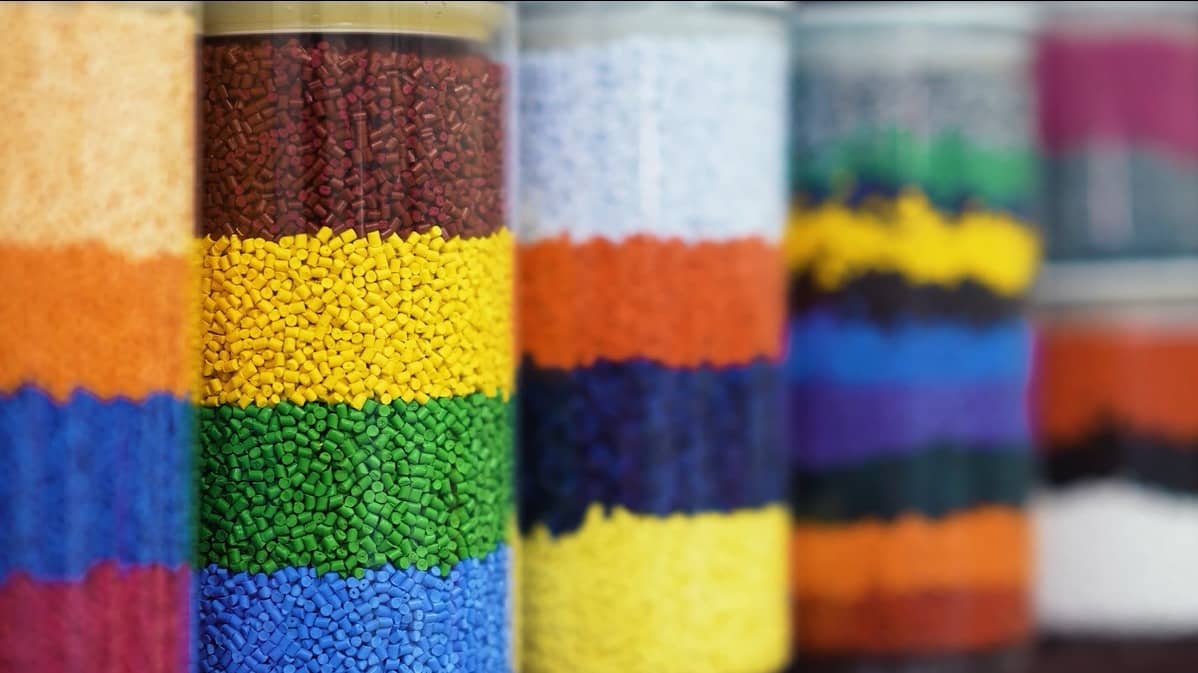
Manufacturers expect plastic products to deliver consistent colour, appearance and performance across every production run. Achieving that result requires more than selecting a base polymer. Pigments, additives, fillers and polymer modifications must be introduced in a controlled and process-compatible form.
This is where masterbatch and polymer compounding add value. They allow manufacturers to incorporate colour and functional performance into plastic materials while maintaining efficient handling and repeatable processing.
What is masterbatch?
Masterbatch is a concentrated mixture of pigments or additives dispersed in a carrier resin. During production, a measured quantity is blended with the base polymer to produce the required colour or functionality.
The main categories include:
- Colour masterbatch
- White masterbatch
- Black masterbatch
- Additive masterbatch
- Combination or multifunctional masterbatch
Compared with handling raw powders, masterbatch can support cleaner production, more accurate dosing and improved dispersion.
What is polymer compounding?
Compounding modifies a polymer by combining it with selected additives, fillers, reinforcements or other polymers under controlled processing conditions. The resulting compound is engineered to provide a defined set of characteristics.
Depending on the application, compounding may be used to improve:
- Stiffness or impact performance
- Heat resistance
- Dimensional stability
- Surface appearance
- Processing behaviour
- Flame or weathering performance
- Cost and material efficiency
The formulation must be designed around the base polymer, manufacturing process and intended service conditions.
Colour consistency and brand identity
Colour is often a critical part of product identity. Small variations between production batches can be visible to customers, particularly in packaging, consumer goods and branded components.
A custom colour-development process normally considers:
- Target colour or physical reference
- Base polymer and natural resin colour
- Product thickness and surface finish
- Processing temperature
- Lighting conditions used for evaluation
- Required resistance to heat, light or weathering
Accurate communication at the development stage helps the technical team create a solution that is appropriate for real production conditions.
Functional additives for plastic products
Additive masterbatch can introduce specific properties without requiring manufacturers to handle small quantities of separate ingredients. Examples may include processing aids, UV-related solutions, antistatic performance, slip or antiblock functionality and other application-specific effects.
The correct additive package depends on the polymer, dosage, process and end use. More additive is not automatically better; performance should be validated at an appropriate concentration.
Benefits of a well-designed masterbatch
A suitable masterbatch or compound can contribute to:
- Repeatable colour across batches
- Uniform pigment or additive dispersion
- Simpler material handling
- More controlled dosing
- Reduced dust compared with powder pigments
- Faster product-development cycles
- Solutions tailored to the customer’s polymer and process
These benefits depend on formulation quality and correct use during manufacturing.
Information to provide when requesting a solution
Manufacturers can accelerate development by sharing complete application information:
- Base polymer and grade
- Production method
- Final product and wall thickness
- Colour standard, sample or reference
- Required functional properties
- Processing-temperature range
- Outdoor, indoor or food-related use
- Target dosage and commercial volume
- Regulatory or documentation requirements
If the product is already in production, a sample of the current material and finished component can also support evaluation.
Testing before commercial production
Laboratory matching is an important step, but production validation remains essential. Equipment, residence time, temperature, mixing and material moisture can all affect the final result.
A controlled trial should assess:
- Colour under agreed lighting
- Dispersion and surface quality
- Processing stability
- Mechanical performance where relevant
- Interaction with other additives
- Finished-product consistency
Documenting the approved formulation and processing conditions supports repeatability for future orders.
MultiTec masterbatch and compounding solutions
MultiTec supports manufacturers with custom colour solutions, performance additives, engineering compounds and application-focused technical coordination. As part of Multi Trade Group’s broader polymer network, customers can discuss base resin, masterbatch, compounds and supply requirements through a connected team.
Explore MultiTec masterbatch and compounding capabilities, or contact our specialists to discuss your colour, additive or compound requirement.